Wednesday, August 14, 2013

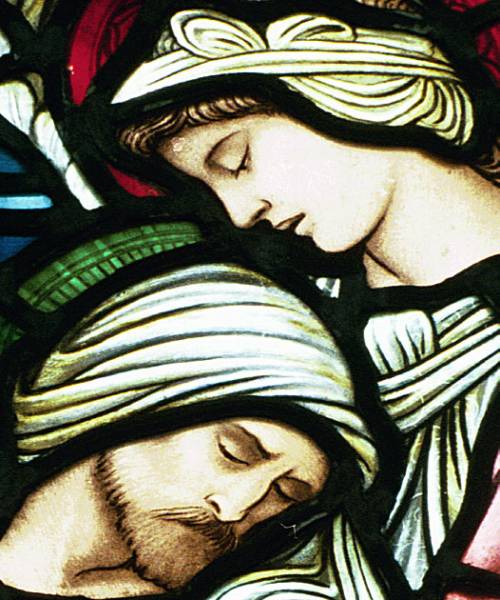
"When Michael the Archangel, disputing with the devil, contended about the body of Moses".


St. Michael the Archangel


(Hebrew "Who is like God?").St. Michael is one of the principal angels; his name was the war-cry of the good angels in the battle fought in heaven against the enemy and his followers. Four times his name is recorded in Scripture:(1) Daniel 10:13 sqq., Gabriel says to Daniel, when he asks God to permit the Jews to return to Jerusalem: "The Angel [D.V. prince] of the kingdom of the Persians resisted me . . . and, behold Michael, one of the chief princes, came to help me . . . and none is my helper in all these things, but Michael your prince."(2) Daniel 12, the Angel speaking of the end of the world and the Antichrist says: "At that time shall Michael rise up, the great prince, who standeth for the children of thy people."(3) In the Catholic Epistle of St. Jude: "When Michael the Archangel, disputing with the devil, contended about the body of Moses", etc. St. Jude alludes to an ancient Jewish tradition of a dispute between Michael and Satan over the body of Moses, an account of which is also found in the apocryphal book on the assumption of Moses (Origen, De Principiis III.2.2). St. Michael concealed the tomb of Moses; Satan, however, by disclosing it, tried to seduce the Jewish people to the sin of hero-worship. St. Michael also guards the body of Eve, according to the "Revelation of Moses" ("Apocryphal Gospels", etc., ed. A. Walker, Edinburgh, p. 647).(4) Apocalypse 12:7, "And there was a great battle in heaven, Michael and his angels fought with the dragon." St. John speaks of the great conflict at the end of time, which reflects also the battle in heaven at the beginning of time. According to the Fathers there is often question of St. Michael in Scripture where his name is not mentioned. They say he was the cherub who stood at the gate of paradise, "to keep the way of the tree of life" (Genesis 3:24), the angel through whom God published the Decalogue to his chosen people, the angel who stood in the way against Balaam (Numbers 22:22 sqq.), the angel who routed the army of Sennacherib (2 Kings 19:35).Following these Scriptural passages, Christian tradition gives to St. Michael four offices:
Regarding his rank in the celestial hierarchy opinions vary; St. Basil (Hom. de angelis) and other Greek Fathers, also Salmeron, Bellarmine, etc., place St. Michael over all the angels; they say he is called "archangel" because he is the prince of the other angels; others (cf. P. Bonaventura, op. cit.) believe that he is the prince of the seraphim, the first of the nine angelic orders. But, according to St. Thomas (Summa Ia.113.3) he is the prince of the last and lowest choir, the angels. The Roman Liturgy seems to follow the Greek Fathers; it calls him "Princeps militiae coelestis quem honorificant angelorum cives". The hymn of the Mozarabic Breviary places St. Michael even above the Twenty-four Elders. The Greek Liturgy styles him Archistrategos, "highest general" (cf. Menaea, 8 Nov. and 6 Sept.).

Veneration

It would have been natural to St. Michael, the champion of the Jewish people, to be the champion also of Christians, giving victory in war to his clients. The early Christians, however, regarded some of the martyrs as their military patrons: St. George, St. Theodore, St. Demetrius, St. Sergius, St. Procopius, St. Mercurius, etc.; but to St. Michael they gave the care of their sick. At the place where he was first venerated, in Phrygia, his prestige as angelic healer obscured his interposition in military affairs. It was from early times the centre of the true cult of the holy angels, particularly of St. Michael. Tradition relates that St. Michael in the earliest ages caused a medicinal spring to spout at Chairotopa near Colossae, where all the sick who bathed there, invoking the Blessed Trinity and St. Michael, were cured.Still more famous are the springs which St. Michael is said to have drawn from the rock at Colossae (Chonae, the present Khonas, on the Lycus). The pagans directed a stream against the sanctuary of St. Michael to destroy it, but the archangel split the rock by lightning to give a new bed to the stream, and sanctified forever the waters which came from the gorge. The Greeks claim that this apparition took place about the middle of the first century and celebrate a feast in commemoration of it on 6 September (Analecta Bolland., VIII, 285-328). Also at Pythia in Bithynia and elsewhere in Asia the hot springs were dedicated to St. Michael.At Constantinople likewise, St. Michael was the great heavenly physician. His principal sanctuary, the Michaelion, was at Sosthenion, some fifty miles south of Constantinople; there the archangel is said to have appeared to the Emperor Constantine. The sick slept in this church at night to wait for a manifestation of St. Michael; his feast was kept there 9 June. Another famous church was within the walls of the city, at the thermal baths of the Emperor Arcadius; there the synaxis of the archangel was celebrated 8 November. This feast spread over the entire Greek Church, and the Syrian, Armenian, and Coptic Churches adopted it also; it is now the principal feast of St. Michael in the Orient. It may have originated in Phrygia, but its station at Constantinople was the Thermae of Arcadius (Martinow, "Annus Graeco-slavicus", 8 Nov.). Other feasts of St. Michael at Constantinople were: 27 October, in the "Promotu" church; 18 June, in the Church of St. Julian at the Forum; and 10 December, at Athaea.The Christians of Egypt placed their life-giving river, the Nile, under the protection of St. Michael; they adopted the Greek feast and kept it 12 November; on the twelfth of every month they celebrate a special commemoration of the archangel, but 12 June, when the river commences to rise, they keep as a holiday of obligation the feast of St. Michael "for the rising of the Nile", euche eis ten symmetron anabasin ton potamion hydaton.At Rome the Leonine Sacramentary (sixth century) has the "Natale Basilicae Angeli via Salaria", 30 September; of the five Masses for the feast three mention St. Michael. The Gelasian Sacramentary (seventh century) gives the feast "S. Michaelis Archangeli", and the Gregorian Sacramentary (eighth century), "Dedicatio Basilionis S. Angeli Michaelis", 29 Sept. A manuscript also here adds "via Salaria" (Ebner, "Miss. Rom. Iter Italicum", 127). This church of the Via Salaria was six miles to the north of the city; in the ninth century it was called Basilica Archangeli in Septimo (Armellini, "Chiese di Roma", p. 85). It disappeared a thousand years ago. At Rome also the part of heavenly physician was given to St. Michael. According to an (apocryphal?) legend of the tenth century he appeared over the Moles Hadriani (Castel di S. Angelo), in 950, during the procession which St. Gregory held against the pestilence, putting an end to the plague. Boniface IV (608-15) built on the Moles Hadriani in honour of him, a church, which was styled St. Michaelis inter nubes (in summitate circi).Well known is the apparition of St. Michael (a. 494 or 530-40), as related in the Roman Breviary, 8 May, at his renowned sanctuary on Monte Gargano, where his original glory as patron in war was restored to him. To his intercession the Lombards of Sipontum (Manfredonia) attributed their victory over the Greek Neapolitans, 8 May, 663. In commemoration of this victory the church of Sipontum instituted a special feast in honour of the archangel, on 8 May, which has spread over the entire Latin Church and is now called (since the time of Pius V) "Apparitio S. Michaelis", although it originally did not commemorate the apparition, but the victory.In Normandy St. Michael is the patron of mariners in his famous sanctuary at Mont-Saint-Michel in the Diocese of Coutances. He is said to have appeared there, in 708, to St. Aubert, Bishop of Avranches. In Normandy his feast "S. Michaelis in periculo maris" or "in Monte Tumba" was universally celebrated on 18 Oct., the anniversary of the dedication of the first church, 16 Oct., 710; the feast is now confined to the Diocese of Coutances. In Germany, after its evangelization, St. Michael replaced for the Christians the pagan god Wotan, to whom many mountains were sacred, hence the numerous mountain chapels of St. Michael all over Germany.The hymns of the Roman Office are said to have been composed by St. Rabanus Maurus of Fulda (d. 856). In art St. Michael is represented as an angelic warrior, fully armed with helmet, sword, and shield (often the shield bears the Latin inscription: Quis ut Deus), standing over the dragon, whom he sometimes pierces with a lance. He also holds a pair of scales in which he weighs the souls of the departed (cf. Rock, "The Church of Our Fathers", III, 160), or the book of life, to show that he takes part in the judgment. His feast (29 September) in the Middle Ages was celebrated as a holy day of obligation, but along with several other feasts it was gradually abolished since the eighteenth century (see FEASTS). Michaelmas Day, in England and other countries, is one of the regular quarter-days for settling rents and accounts; but it is no longer remarkable for the hospitality with which it was formerly celebrated. Stubble-geese being esteemed in perfection about this time, most families had one dressed on Michaelmas Day. In some parishes (Isle of Skye) they had a procession on this day and baked a cake, called St. Michael's bannock.

....

Taken from: http://www.newadvent.org/cathen/10275b.htm

Tuesday, August 13, 2013

The Death of Moses


MOSES was soon to die, and he was commanded to gather the children of Israel together before his death and relate to them all the journeyings of the Hebrew host since their departure from Egypt, and all the great transgressions of their fathers, which brought His judgments upon them, and compelled Him to say that they should not enter the Promised Land. Their fathers had died in the wilderness, according to the word of the Lord. Their children had grown up, and to them the promise was to be fulfilled of possessing the land of Canaan. Many of these were small children when the law was given, and they had no remembrance of the grandeur of the event. Others were born in the wilderness, and lest they should not realize the necessity of their obeying the Ten Commandments and all the laws and judgments given to Moses, he was instructed of God to recapitulate the Ten Commandments, and all the circumstances connected with the giving of the law.
Moses had written in a book all the laws and judgments given him of God, and had faithfully recorded all His instructions given them by the way, and all the miracles which He had performed for them, and all the murmurings of the children of
Page 171
Israel. Moses had also recorded his being overcome in consequence of their murmurings.
Final Instruction to Israel
All the people were assembled before him, and he read the events of their past history out of the book which he had written. He read also the promises of God to them if they would be obedient, and the curses which would come upon them if they were disobedient.
Moses told them that, for their rebellion, the Lord had several times purposed to destroy them, but he had interceded for them so earnestly that God had graciously spared them. He reminded them of the miracles which the Lord did unto Pharaoh and all the land of Egypt. He said to them, "But your eyes have seen all the great acts of the Lord which He did. Therefore shall ye keep all the commandments which I command you this day, that ye may be strong, and go in and possess the land, whither ye go to possess it." Deut. 11:7, 8.
Moses especially warned the children of Israel against being seduced into idolatry. He earnestly charged them to obey the commandments of God. If they would prove obedient and love the Lord and serve Him with their undivided affections, He would give them rain in due season and cause their vegetation to flourish, and increase their cattle. They should also enjoy especial and exalted privileges, and should triumph over their enemies.
Moses instructed the children of Israel in an earnest, impressive manner. He knew that it was his last opportunity to address them. He then finished writing in a book all the laws, judgments, and statutes which God had given him, also the various regulations
Page 172
respecting sacrificial offerings. He placed the book in the hands of men in the sacred office and requested that, for safe keeping, it should be put in the side of the ark, for God's care was continually upon that sacred chest. This book of Moses was to be preserved, that the judges of Israel might refer to it if any case should come up to make it necessary. An erring people often understand God's requirements to suit their own case; therefore the book of Moses was preserved in a most sacred place, for future reference.
Moses closed his last instructions to the people by a most powerful, prophetic address. It was pathetic and eloquent. By inspiration of God he blessed separately the tribes of Israel. In his closing words he dwelt largely upon the majesty of God and the excellency of Israel, which would ever continue if they would obey God and take hold of His strength.
 
The Decease ... of Moses
"And Moses went up from the plains of Moab unto the mountain of Nebo, to the top of Pisgah, that is over against Jericho. And the Lord shewed him all the land of Gilead, unto Dan. And all Naphtali, and the land of Ephraim, and Manasseh, and all the land of Judah, unto the utmost sea, and the south, and the plain of the valley of Jericho, the city of palm trees, unto Zoar. And the Lord said unto him, This is the land which I sware unto Abraham, unto Isaac, and unto Jacob, saying, I will give it unto thy seed: I have caused thee to see it with thine eyes, but thou shalt not go over thither. So Moses the servant of the Lord died there in the land of Moab, according to the word of the Lord. And He buried him in a valley in the land of Moab, over against Beth-peor: but no man knoweth of his sepulchre unto this day. And
Page 173
Moses was an hundred and twenty years old when he died: his eye was not dim, nor his natural force abated." Deut. 34:1-7.
It was not the will of God that anyone should go up with Moses to the top of Pisgah. There he stood, upon a high prominence on Pisgah's top, in the presence of God and heavenly angels. After he had viewed Canaan to his satisfaction, he lay down, like a tired warrior, to rest. Sleep came upon him, but it was the sleep of death. Angels took his body and buried it in the valley. The Israelites could never find the place where he was buried. His secret burial was to prevent the people from sinning against the Lord by committing idolatry over his body.
Satan exulted that he had succeeded in causing Moses to sin against God. For this transgression Moses came under the dominion of death. If he had continued faithful, and his life had not been marred with that one transgression, in failing to give God the glory of bringing water from the rock, he would have entered the Promised Land ....
 
....
 

The Burial of Moses


 By Nebo’s lonely mountain.
On this side Jordan’s wave.
In a vale in the land of Moab
There lies a lonely grave;
And no man knows that sepulcher,
And no man saw it e’er;
For the angels of God upturned the sod
And laid the dead man there.
That was the grandest funeral
That ever passed on earth;
But no man heard the trampling,
Or saw the trains go forth;
Noiselessly as the daylight
Comes when the night is done,
And the crimson streak on ocean’s cheek
Grows into the great sun.
Noiselessly as the spring-time
Her crown of verdure weaves,
And all the trees on all the hills
Open their thousand leaves;
So without the sound of music,
Or voice of them that wept,
Silently down from the mountain’s crown
The great procession swept.
This was the truest warrior
That ever buckled the sword;
This the most gifted poet
That ever breathed a word;
And never earth’s philosopher
Traced, with his golden pen,
On the deathless page, truths half so sage
As he wrote down for men.
And hath he not high honor?-
The hillside for a pall!
To lie in state, while angels wait,
With stars for tapers tall
And the dark rock-pines like tossing plumes,
Over his bier to wave,
And God’s own hand, in that lonely land,
To lay him in the grave!
In that strange grave without a name,
Whence his uncoffin’d clay
Shall break again- O wondrous thought!
Before the judgment day,
And stand, with glory wrapped around,
On the hills he never trod,
And speak of the strife that won our life
With the Incarnate Son of God.
O lonely grave in Moab’s land!
O dark Beth-Peor’s hill!
Speak to these curious hearts of our,
And teach them to be still.
God hath His mysteries of grace,
Ways that we cannot tell,
He hides them deep, like the hidden sleep
Of Him who loved so well.

 
~Cecil Francis Alexander (Adapted)~


http://bethanyipc.sg/poems/bulletin080113.htm

Amenemhet I was the "New King" of Exodus 1:8


The Dynasty of the Oppression

Some say the Israelites labored in Egypt during the 6th Dynasty; while others claim the dynasty of the oppression was the 19th. Still others proclaim the 18th to be the one -- or the period of the Hyksos rulers of Egypt! By turning to the Bible and examining the works of early historians, the dynasty of the oppression becomes very apparent to those who are seeking the TRUTH with an open mind!

John D. Keyser

In the works of Flavius Josephus (1st-century A.D. Jewish historian) we read the following:

Now it happened that the Egyptians grew delicate and lazy, as to painstaking; and gave themselves up to other pleasures, and in particular to the love of gain. They also became VERY ILL AFFECTED TOWARDS THE HEBREWS, as touched with envy at their prosperity; for when they saw how the nation of the Israelites flourished, and were become eminent already in plenty of wealth, which they had acquired by their virtue and natural love of labour, they thought their increase was to their own detriment; and having, in length of time, forgotten the benefits they had received from Joseph, PARTICULARLY THE CROWN BEING NOW COME INTO ANOTHER FAMILY, they became very abusive to the Israelites, and contrived many ways of afflicting them; FOR THEY ENJOINED THEM TO CUT A GREAT NUMBER OF CHANNELS [CANALS] FOR THE RIVER [NILE], AND TO BUILD WALLS FOR THEIR CITIES AND RAMPARTS, THAT THEY MIGHT RESTRAIN THE RIVER, AND HINDER ITS WATERS FROM STAGNATING, UPON ITS RUNNING OVER ITS OWN BANKS: THEY SET THEM ALSO TO BUILD PYRAMIDS, and by all this wore them out; and forced them to learn all sorts of mechanical arts, and to accustom themselves to hard labour. And FOUR HUNDRED YEARS did they spend under these afflictions.... (Antiquities of the Jews, chap. IX, section 1).

Within this passage from Josephus lie several CLUES that will help us to determine the dynasty of the oppression of the Israelites.

The Change of Rulership

Josephus mentions that one of the reasons the Egyptians started to mistreat the Israelites was because “THE CROWN [HAD]...NOW COME INTO ANOTHER FAMILY.” Does Egyptian history reveal a time when the crown of Egypt passed into the hands of a totally unrelated family? Indeed it does!

In the Leningrad museum lies a papyrus of the 12th DYNASTY, composed during the reign of its FIRST KING AMENEMHET I. The papyrus is in the form of a PROPHECY attributed to the sage Nefer-rehu of the time of King Snefru; and in it an amazing prediction is made:

A king shall come from the south, called AMUNY [shortened form of the name Amenemhet], the son of a woman of Nubia, and born in Upper Egypt....He shall receive the White Crown, he shall wear the Red Crown [will become ruler over ALL Egypt]....the people of his time shall rejoice, THE SON OF SOMEONE shall make his name for ever and ever....The Asiatics shall fall before his carnage, and the Libyans shall fall before his flame....There shall be built the ‘WALL OF THE PRINCE [RULER],’ and the Asiatics shall not (again) be suffered to go down into Egypt.
Here the NON-ROYAL DESCENT of Amenemhet I. is clearly indicated, for the phrase “son of Someone” was a common way of designating a man of good, though not princely or royal, birth. According to George Rawlinson: “There is NO INDICATION OF ANY RELATIONSHIP between the kings of the twelfth and those of the eleventh dynasty; and it is a conjecture not altogether improbable, that the Amen-em-hat who was the FOUNDER OF THE TWELFTH DYNASTY was descended from THE FUNCTIONARY OF THE SAME NAME, who under Mentuhotep II. [of the previous dynasty] executed commissions of importance. At any rate, he makes NO PRETENSION TO ROYAL ORIGIN, and the probability would seem to be that he attained the throne NOT THROUGH ANY CLAIM OF RIGHT, but by his own personal merits. (History of Ancient Egypt. Dodd, Mead & Co., N.Y. 1882, pp.146-147).

“His own personal merits” probably included conspiracy: “We have to suppose that at a given moment he CONSPIRED AGAINST HIS ROYAL MASTER [last king of the 11th Dynasty], and perhaps after some years of confusion mounted the throne IN HIS PLACE. A recent discovery lends colour to this hypothesis. A Dyn. XVIII inscription extracted from the third pylon at Karnak names after Nebhepetre and Sankhkare a ‘GOD’S FATHER’ SENWOSRE who from his title can only have been the NON-ROYAL PARENT of Ammenemes I [Greek form of Amenemhet].” (Egypt of the Pharaohs, by Sir Alan Gardiner. Oxford University Press, England. 1961, p.125).

The inscriptions on the monuments make it clear that his elevation to the throne of Egypt was no peaceful hereditary succession, but a STRUGGLE for the crown and scepter that continued for some time. He fought his way to the throne, and was accepted as king only because he triumphed over his rivals. After the fight was ended and the towns of Egypt subdued, the new pharaoh began to extend the borders of Egypt.

The fact that the 12th Dynasty was a “maverick” dynasty -- one that did not conform to the royal blood line of the pharaohs -- was well known in the 18th Dynasty. According to information provided by the family pedigrees in several tombs of the 18th Dynasty, and by texts engraved or painted on certain objects of a sepulchral nature, the ANCESTOR of the royal family of this dynasty was worshiped in the person of the old Pharaoh MENTUHOTEP OF THE 11th DYNASTY, the 57th king of the great Table of Abydos. The royal family of the 18th Dynasty considered the dynasty of Amenemhet I. to be an aberration!

According to Henry Brugsch: “The transmission of the PURE BLOOD of Mentuhotep to the king Amosis (Aahmes) of the EIGHTEENTH DYNASTY was made by the hereditary princess Aahmes-Nofertari (‘the beautiful consort of Aahmes’), who married the said king, and whose issue was regarded as the LEGITIMATE RACE of the Pharaohs of the house of Mentuhotep.” (A History of Egypt Under the Pharaohs. Second edition. John Murray, London. 1881, p. 314).

Thus, with the ascension of Amenemhet I. of the 12th Dynasty, the crown had “NOW COME INTO ANOTHER FAMILY.”

The Taming of the Nile!

Josephus’ description of the type of labor the Israelites were forced to endure under the new pharaoh is REMARKABLY SIMILAR to the observations of DIODORUS SICULUS, the first-century B.C. Greek historian:

Moeris...dug a lake of remarkable usefulness, though at a cost of INCREDIBLE TOIL. Its circumference, they say, is 3,600 stades, its depth at most points fifty fathoms. Who, then, on estimating the greatness of the construction, would not reasonably ask HOW MANY TENS OF THOUSANDS OF MEN MUST HAVE BEEN EMPLOYED [?], AND HOW MANY YEARS THEY TOOK TO FINISH THEIR WORK? No one can adequately commend the king’s design, which brings such usefulness and advantage to all the dwellers in Egypt.
Since the Nile kept NO DEFINITE BOUNDS in its rising, and the fruitfulness of the country depended upon the river’s regularity, THE KING DUG THE LAKE TO ACCOMMODATE THE SUPERFLUOUS WATER, SO THAT THE RIVER SHOULD NEITHER, WITH ITS STRONG CURRENT, FLOOD THE LAND UNSEASONABLY AND FORM SWAMPS AND FENS, nor, by rising less than was advantageous, damage the crops by lack of water. BETWEEN THE RIVER AND THE LAKE HE CONSTRUCTED A CANAL 80 STADES IN LENGTH AND 300 FEET IN BREADTH. Through this canal, at times he admitted the water of the river, at other times he excluded it, thus providing the farmers with water at fitting times by opening the inlet and again closing it scientifically and at great expense. — The Pyramids of Egypt, by I.E.S. Edwards. Viking Press, London. 1986, pp. 234-235.

These engineering marvels are noted by author J.P. Lepre: “Amenemhat III is also credited with the mighty engineering feat of constructing the irrigation canal now known as the Bahr Yusif, and of using this canal to REGULATE THE FLOW OF WATER FROM THE NILE to Lake Fayum during the flood season. This water was held there by sluices, and later let out again, at will, back to the section of the Nile from Assyout down to the Mediterranean Sea, REGULATING THE HEIGHT OF THE RIVER in that area during the dry season. This irrigation system was the PROTOTYPE for the modern High Aswan Dam.”

Although Amenemhat III was involved in several great engineering works, the Bahr Yusif endeavor is of special note. For here, two 20-mile long dykes -- one straight and the other semicircular -- were constructed so as to aid in the ADJUSTMENT OF THE WATER LEVEL through the use of sluices, and to reclaim 20,000 acres of farmland by enriching the soil." (The Egyptian Pyramids. McFarland & Company, Inc. Jefferson, N.C. 1990, pp. 217-218).

Obviously, both Josephus and Diodorus Siculus are talking about THE SAME construction project carried out during the reign of AMENEMHET III. OF THE 12TH DYNASTY!
 
....
 

Tuesday, August 6, 2013

How Did Paul Learn about Jannes and Jambres?


By Wayne Jackson
 
“In his second letter to Timothy, Paul referred to two men who ‘withstood’ Moses. He cites their names as Jannes and Jambres. Supposedly, these were the ‘magicians’ referred to several times in the book of Exodus (chapters 7-9). Since their names are not mentioned in the Old Testament, how could Paul possibly have had that information?”

In the first place, the fact that the names of the magicians that opposed Moses are not recorded in the Old Testament does not mean that they were unknown. There are many instances in the ancient record of antagonists whose names were not mentioned explicitly. There certainly is no literary rationale that would demand such.
The fact is, however, there are references to these names in the literature of antiquity. Albert Pietersma has noted that the two names “appear frequently in Jewish, Christian, and pagan sources extant in Arabic, Aramaic, Greek, Hebrew, Latin Old and Middle English, and Syriac” (The Anchor Bible Dictionary, ed. David Noel Freedman, New York: Doubleday, 1992, Vol. 3, p. 638).
Since Paul had a broad education in both Hebrew tradition (Galatians 1:14), and in secular literature (cf. Acts 17:28; Titus 1:12), he might very well have supplied the names from his own reservoir of knowledge (Acts 26:24) — under the supervision of the Holy Spirit of course. It is not inconsistent with a lofty concept of inspiration that a sacred writer might incorporate information from various sources into his narration. This is the very point that Luke made in the opening remarks of his Gospel account regarding Jesus.
“Forasmuch as many have taken in hand to draw up a narrative concerning those matters which have been fulfilled among us, even as they delivered them unto us, who from the beginning were eyewitnesses and ministers of the word, it seemed good to me also, having traced the course of all things accurately from the first, to write unto you in order, most excellent Theophilus, that you might know the certainty concerning the things wherein you were instructed” (Luke 1:1-3 ASV; emphasis supplied).
The participle rendered, “having traced,” carries the idea of “pursuing, or investigating a matter” (Gerhard Kittel, Theological Dictionary of the New Testament, Grand Rapids: Eerdmans, 1964, Vol. I, p. 215).
Professor Norval Geldenhuys, who taught at both Princeton and Cambridge, described Luke’s research as follows.
Through long periods (during his travels along with Paul and also at other times) he made thorough researches concerning the Gospel stories so that he was able to set forth the actual course of events. He collected and studied all available written renderings of words and works of Jesus; wherever the opportunity was presented to him he discussed the Gospel stories with persons who possessed firsthand knowledge concerning Him. . . " (Commentary on the Gospel of Luke, Grand Rapids: Eerdmans, 1956, p. 53).
If then, the Spirit of God could guide Luke in the selection, organization, and recording of materials appropriate to his Gospel account, he similarly could have led Paul to incorporate the names of Jannes and Jambres into his letter to Timothy, from whatever source they were derived — be it oral or written.
Dr. Henry Thiessen once noted, regarding this particular point, that “the Holy Spirit supervised the selection of the materials to be used and the words to be employed in writing. [He] finally, preserved the authors from all error and from all omission” (H.C. Thiessen, Introductory Lectures in Systematic Theology, Grand Rapids: Eerdmans, 1949, p. 107).
The fact is, the names of Jannes and Jambres could have been revealed directly to the apostle, had God so chosen, though this may not be the most likely theory of what happened.
It simply is sufficient to say, it constitutes no problem that the names are not found in the Old Testament, but are present in Paul’s letter to Timothy.

Wjphoto

About the Author

Wayne Jackson has written for and edited the Christian Courier since its inception in 1965. He has also written several books on a variety of biblical topics including The Bible and Science, Creation, Evolution, and the Age of the Earth, The Bible on Trial, and a number of commentaries. He lives in Stockton, California with his dear wife, and life-long partner, Betty.

....

Taken from: https://www.christiancourier.com/articles/1006-how-did-paul-learn-about-jannes-and-jambres

Wednesday, July 31, 2013

Dick Gagel asks "isn't the XII [Dynasty of Egypt] too early?" for Moses.


Dear Damien,

I must have had your paper on Moses ages ago, made my notes in the margin but never shared my understanding of the man's early life with you.
Used the following to gainsay those who called him and the Exodus "a myth".
It would appear we differ on both dynasties and chronology - isn't the XII too early?

MOSES was a general, as fully described by Josephus in Antiquities, Book II, ch X.
In ch XI, after he had virtually saved Egypt as its victorious general over the Ethiopians/Cushites, he had to flee for his life from an assassination plot. He was heir to a throne in Egypt as the ruler had a daughter but no grandchildren. Josephus: "if Moses had been slain, there was no one, either a kin or adopted, that had any oracle on his side for pretending to the crown of Egypt." Here are our clues - a dynasty in which Moses is General, and one which effectively ended at the point in history that Moses fled and did not regain authority in the land. There is such a dynasty which also exercised jurisdiction in the Northeastern Delta where Israel dwelt and Moses was found - Dynasty XIII.

The total length of this dynasty according to Africanus' and Eusebius' epitomes from Manetho was 453 years under 60 rulers. But the version of Barbarus provides a missing detail from Manetho. It reveals that for a time the court was not only at Thebes, but at Bubastis in the Delta for the first 153 years (Alfred Schoene's edition of Eusebius, p. 214).
In the Turin Canon catalogue of kings of the thirteenth dynasty, listed number 17, is "The General" with the throne name of Semenkhkare (Gardiner's Egypt of the Pharaohs, p. 440; and Weigall's History of the Pharaohs, pp 136, 151-152). The Egyptian word for "the General" was Mermeshoi - not in all dynastic history does this title appear again as the personal name of a ruler of Egypt.
When Moses was made General or Commander of the Troops, he automatically inherited royal authority, as only kings could have the supreme command of the army, explaining his appearance in the list. Before the rise to power of this famous General, the thirteenth dynasty was of Asiatic blood. Its kings at time bore the epithet "the Asiatic" - hence no basic prejudice in adopting the Hebrew child Moses into the family. (See volume II, ch II of the revised Cambridge Ancient History, ed.1962.)
The sixteenth king listed in the Turin Canon - just before "the General" - is Userkare Khendjer - the latter being an un-Egyptian personal name. He ruled over the Delta as well as Upper Egypt. A pyramid of his has been found at South Saqqara. No descendant of his is known to have succeeded to the throne. Though nothing more is known of this man's family, every evidence points to him as the Pharaoh whose daughter is mentioned in the book of Exodus. Within a few years the influence of this dynasty in the eastern Delta ceased.
The kings of this obscure period often have their names associated with king Neferkare (Turin Canon) on royal seals who is Phiops of Manetho, and commonly known as Pepi the Great. Here is the final proof that these minor rulers of Dynasty XIII were contemporaneous with the last great Pharaoh of the sixth dynasty of Memphis - the pharaoh of the Oppression. More than one name on a scarab has puzzled many historians, who view Egypt as generally ruled by one king at a time, but literally hundreds of such seals have been found. They are generally treated with discreet silence, for the implication of these seals would revolutionise the history of Egypt. (See The Sceptre of Egypt, by William C Hayes,, Vol.I, p.342)
Moses is finally able to return to Egypt "and it came to pass in the course of those many days that the king of Egypt died" (Ex. 2:23) confirms that it was a long wait as Pepi the Great ruled for 94 years and died at age 100, succeeded by his son Menthesuphis (Manetho) or Merenre II-Antyemzaef (Turin Canon) - the Pharaoh of the Exodus who ruled only one year 1487-1486, perishing in the Red Sea.
His widow Nitocris (Manetho) or Nitokerty (Turin Canon) ruled 12 years, followed by their son Neferka "the younger" - his first born elder brother and heir presumptive having died at the time of the Exodus.
Manetho ends his list here as the invading Hyksos having by then taken full control of the country with their Dynasty XV and ruled Egypt for the next 400 years.
I feel we are on safe ground to designate Pepi the Great as the oppressive pharaoh. Userkare Kendjer with an ethnic affinity with the Hebrews does not strictly apply the rules emanating from Memphis by elevating Moses who must later have gained huge popularity following his military success. Those factors may well have raised serious concerns at Memphis HO, prompting Pepi the Great to seek Moses' death by giving those assassination orders to the Bubastis court, and also maintaining his fatwa against Moses till the end of his life and reign.

Best regards

....


Damien Mackey replies:
 
 
Dear Dick
 
I just remembered that I, a few months ago, wrote a proposed synthesis of the biblical era, from Abraham to the Exodus, with the corresponding Egyptian history (and archaeology). See my:
 
Connecting the Biblical Patriarchs to Ancient Egypt

The article still has to be finished, but it already contains the basis of what my view is. Fundamental to my reconstruction are the following (after that I am tentative):
 
- The archaeological period from Abram at the time of the four Mesopotamian kings, to the Exodus, is bookended by Abram in Late Chalcolithic and Ghassul IV (Transjordan) and the Exodus Israelites as the Middle Bronze I (MBI) people.
- According to this archaeological evidence, Abram was contemporaneous with pharaoh Narmer, who may even have been the Pharaoh of Abram and Sarai. This latter, the biblical Abimelech pharaoh of Abraham and Isaac, was clearly a very long-reigning ruler, which would suit pharaoh Aha, the first dynastic king (who may have been Narmer, and Menes).
- Joseph is surely Imhotep, and Ptah-hotep.
- I fully accept the expert testimony of Dr R. Cohen (Israelites as MBI) and Professor Emmanuel Anati (Har Karkom is Mount Sinai).
- Anati notes (and I accept this) that the story of the Egyptian Sinuhe shares ‘a common matrix’ with that of Moses fleeing Egypt for Midian. (Obviously there are some vast differences as well between these two tales). That nails Moses to Late Amenemes I and early Sesostris I. Revisionists have found some striking 12th dynasty correlations with the Exodus account (e.g. those bricks mixed with straw).
- The MBI people do just what the Israelites did in their trek through the Paran desert, Transjordania and into Palestine, where Early Bronze Jericho falls.


The 13thdynasty may possibly be partly contemporaneous with the life of Moses.
But be careful. The name, “Moses”, did not mean “General”. It was given to Moses with the meaning of being “drawn from the water” (Exodus 2:10): “She named him Moses, saying, "I drew him out of the water”." So that might shake your correspondence between Mermoshis and Userkare K.
(Perhaps Joseph, not Moses, was more likely to have left a dynasty of Asiatics).
You will see that I, too, have the 6th dynasty contemporaneous with the era of Moses, though I have not yet been able fully to integrate it all. Given my synthesis of dynasties (following Courville’s clue but not his model), then some 13th dynasty princes (or whatever they were) may well have been contemporaneous with the 6th dynasty’s Neferkare (Pepi the Great).
But Pepi the Great was not a founder, a “new king” (exodus 1:8), so you perhaps need to allow for two major pharaohs before the Pharaoh of the Oppression: namely, the founder Pharaoh and then, as according to the Artapanus tradition, the “Chenephres”(Neferkare?) who married Moses’ Egyptian ‘mother’, “Merris” (Meresankh, or Meres-ankh).
Artapanus’s“Chenephres” (Neferkare) and “Merris” pattern is fulfilled both with Chephren and Ankhesenmerire (i.e. Meresankh), in the 4th dynasty, and perhaps with Huni (Neferkare) and Meresankh, as explained in the above article, in relation to Sneferu (as Moses).
Merenre, followed by Nitocris, then the Hyksos, is a pattern that I, too, have previously proposed for the finale – but without properly having been able to blend the entire 6th dynasty with the biblical picture.


I hope that this is helpful

Damien.

Tuesday, July 30, 2013

Moses Sign Sacrament Salvation


Footprints of God: Peter Keeper of the Keys 1-DVD + Study Guide (Footprints of God)

The first film in a projected 10-video series, The Footprints of God: The Story of Salvation from Abraham to Augustine, join host Stephen Ray, best-selling author and dynamic speaker, on an amazing journey of adventure about Peter, the rugged fisherman Jesus chose to lead His Church. Filmed completely on location in Rome and the Holy Land, you will follow Peter from Galilee to Rome to discover answers about the major role of the Papacy in the saga of salvation.
View Book

  • Footprints of God: Mary the Mother of God 1-DVD + Study Guide (Footprints of God)

    This second film in the the Footprints of God series follows Mary on her extraordinary journey on location in Turkey, Israel and Greece with popular Catholic author and speaker Stephen Ray as guide. Down-to-earth teaching on subjects like Mary’s Immaculate Conception, Assumption into Heaven, and her role of intercessor, and more are offered in an energized, high-impact style that combines the best elements of a travel documentary, biography, Bible study, apologetics course, and church history review.
    View Book

  • Footprints of God: Paul Contending for the Faith 1-DVD + Study Guide (Footprints of God)

    Zealous for the God of Israel, Saul of Tarsus pursued murderous threats against the disciples of Jesus. But Saul’s zeal was turned upside down when he was knocked from his “high horse” and humbled by the hand of God. Join the adventure in this edition of the Footprints of God series as Stephen Ray, best-selling author and popular Bible teacher, takes you on the road with St. Paul through Israel, Syria, Turkey, Greece and Italy. Fall from a horse in the desert and dangle over the Damascus Wall in a basket.
    View Book

  • Footprints of God: Apostolic Fathers 1-DVD + Study Guide (Footprints of God)

    In this Footprints of God film, Apostolic Fathers Handing on the Faith, Steve Ray takes you on an exciting journey to the Roman Empire and the world of the first Christians. You’ll sit at the feet of the apostles, celebrate the Eucharist in hiding, and tremble at the suffering they endured for Jesus Christ. Retrace their steps through Israel, Turkey, France and Italy. All this in a fast-paced, entertaining biography, travel documentary, Bible study, apologetics course and Church history study rolled into one remarkable adventure!
    View Book

  • Footprints of God: Moses Sign Sacrament Salvation 1-DVD + Study Guide (Footprints of God)

    Born a slave, raised a prince, and humbled in exile, Moses returned to confront the mighty Pharaoh with only a staff and the promise of God. Join Steve Ray, best-selling author and popular Bible teacher, in this edition of the Footprints of God series as he takes you on an incredible journey of discovery through Egypt, Jordan, and Israel. Together you'll discover how Moses, the Exodus, and the Hebrew experience in the wilderness point to the coming of Christ and our salvation. Gain a deeper appreciation for our Savior, and for the Church and her Sacraments.
    View Book

  • Footprints of God: David and Solomon Expanding the Kingdom 1-DVD + Study Guide (Footprints of God)

    Why is Jesus called the Son of David and why is that important to understanding Our Lord? How did the Kingdom of Israel prefigure and anticipate the Kingdom of God and the Catholic Church? Join Steve Ray in this edition from the Footprints of God series as he takes you on a fast-paced adventure through the mountains and deserts of Israel to discover not only where David and Solomon lived and reigned, but also the meaning of their lives and kingdoms.
    View Book

  • Footprints of God: Jesus The Word Became Flesh 1-DVD + Study Guide (Footprints of God)

    In this edition in the Footprints of God series, join Stephen Ray as he catches fish in the Sea of Galilee, camps along the Jordan, and explores the places Jesus lived and performed his miracles. Follow the incredible journey through the streets of Jerusalem to Calvary and the tomb, to the Resurrection and Pentecost. Gain a deeper appreciation for our Savior and the salvation he purchased for the world. All this in a fast-paced, entertaining biography, travel documentary, Bible study, apologetics course and Church history study rolled into one remarkable adventure!
    View Book

  • Footprints of God: Over Holy Ground- Exploring Sacred Sites 1-DVD (Footprints of God)

    Puts you in the skies above the Holy Land and beyond, giving you a bird’s-eye view of such significant sites as the Temple Mount in Jerusalem, the pyramids of Egypt, St. Peter’s Basilica in Rome and many, many more. All complemented by relevant passages of scripture, and backed by a moving musical score. Over Holy Ground takes inspirational filmmaking to new heights! Duration: 30 Mins
    View Book